You're Making More Than Ever. So Why Are You Falling Behind?
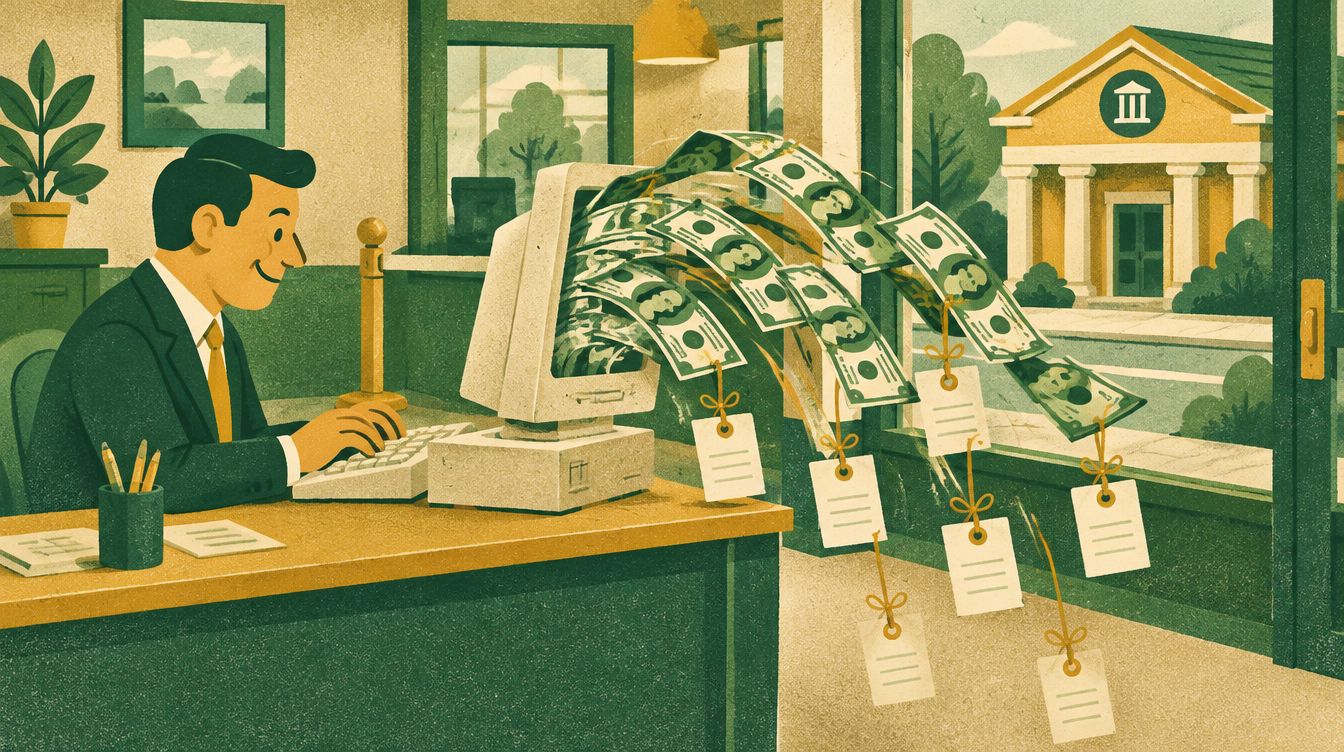
You're probably making more money than you ever have. Maybe more than your parents ever did. So why does it feel like you're running faster every year and still sliding backward?
It's not just you. It's not because you're bad with money. And it isn't only that everything got expensive.
So on paper, income actually beat everyday prices. What it didn't keep up with was a house. And the people who already owned one got that jump without working an extra hour. That's the gap you feel. It isn't you against the grocery store. It's you against the people who own things.
To see why, you have to start with something almost nobody is taught: where money actually comes from.
The short version
- Most money is created by banks when people borrow.
- When money grows faster than the economy, each dollar buys less.
- People who own things gain. People who live on a paycheck fall behind.
Here's how that works, in plain English.
Think of a pizza
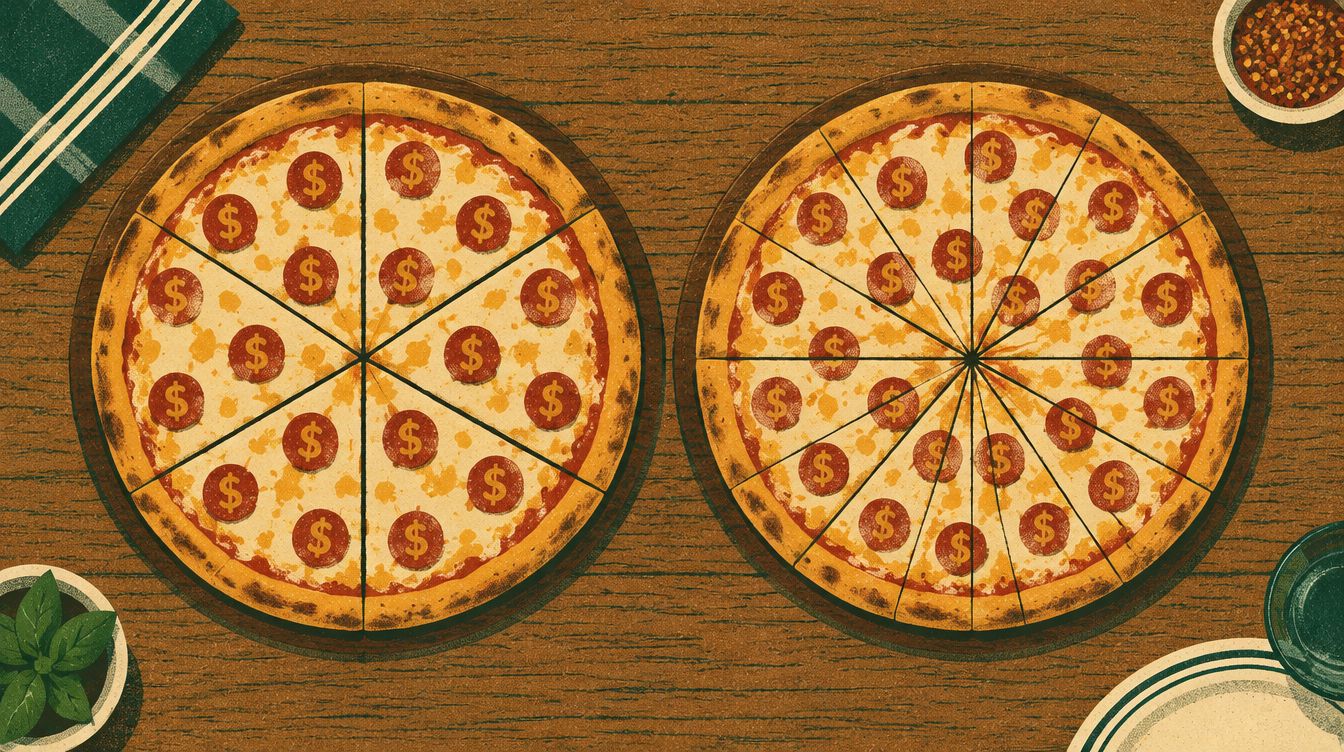
Imagine everything you can buy is one big pizza, and each dollar is a slice.
Cut the pizza into 8 slices and each slice is a decent size. Cut the same pizza into 12 slices and every slice gets smaller. Nobody added more pizza. They just made more slices.
The economy does grow, so the pizza gets a little bigger each year. But when new dollars get added faster than the pizza grows, each dollar becomes a smaller slice. It buys less of everything: groceries, rent, gas, houses.
So the real question is: who makes the new slices, and how?
Most money is made by banks, not the government
Most people think the government prints our money. But paper cash is only about 1 in 10 dollars. The rest is just numbers in bank accounts.
Most of those numbers are created by regular banks, every time they make a loan.
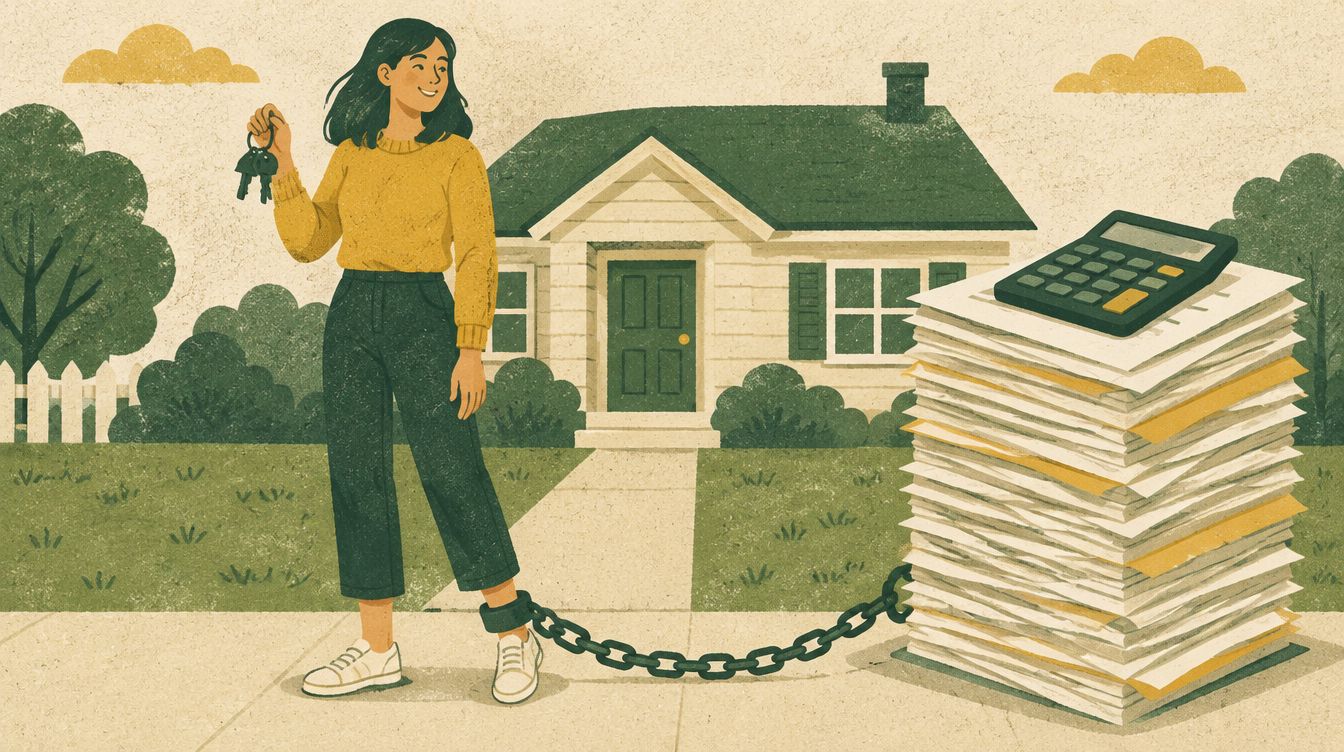
Say Maria buys a house with a $300,000 mortgage. You'd think the bank takes $300,000 out of other people's savings and hands it over. It doesn't. The bank simply adds $300,000 to an account. Those dollars did not exist yesterday. Today they do.
Maria now owes $300,000 plus interest. The seller now has $300,000 to spend. New money just came into the world, and it came in attached to a debt.
Banks only do this for people they think will pay them back, and they charge interest for it. Mortgages, car loans, business loans, and credit card balances all work this way.
Most dollars exist because someone, somewhere, borrowed them.
If you learned that banks just lend out other people's deposits, you're not alone. That's what most textbooks used to say. But the Bank of England explained it plainly in a 2014 report: when banks make loans, they create new money.
Banks still have limits. They need some of their own money set aside, borrowers who can repay, and enough cash for withdrawals. (The old rule that banks keep a set share of deposits in reserve was dropped to zero in 2020.) And your savings are still yours. FDIC insurance covers bank deposits up to $250,000.
When Maria pays her loan back, that money goes away again. So the amount of money mainly keeps growing as long as people keep borrowing more.
Money used to have a limit
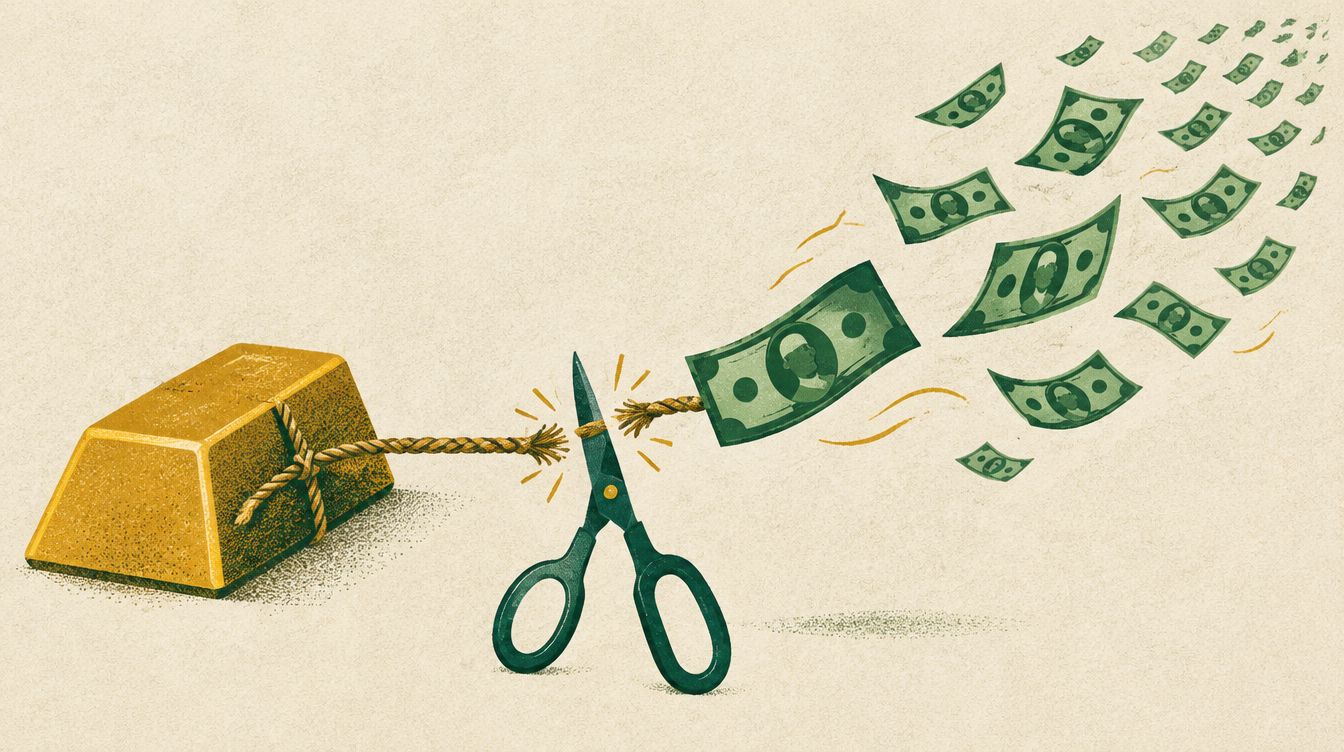
For a long time, the dollar was tied to gold. That put a ceiling on how many dollars could exist, because there was only so much gold.
That link was loosened in 1933 and cut completely in 1971. Since then, nothing physical limits how many dollars can be created.
The biggest borrower: the U.S. government
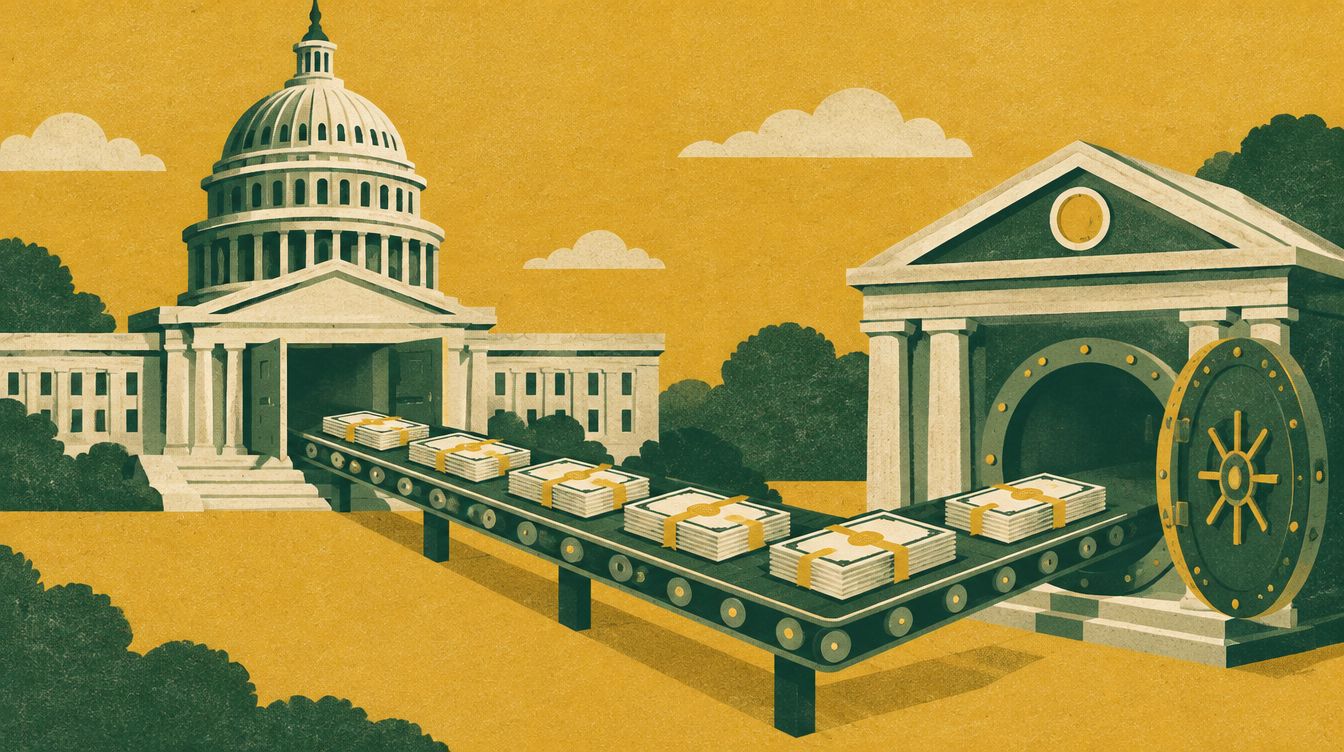
The government spends almost $2 trillion more each year than it collects in taxes.
To cover the gap, it borrows by selling bonds. A bond is a promise to pay back: "Lend me $1,000 today. I'll pay you a little interest every year, and give you your $1,000 back in 10 years."
Here's the key part. When you or I buy a bond with our savings, no new money is made. Dollars just move from us to the government. New money appears when banks or the Fed buy those bonds with dollars they create. More on that in a minute.
Add up all the borrowing that hasn't been paid back, and as of 2026 the national debt is over $40 trillion.
The government borrows the money. Banks and the Fed create it.
Borrowing to pay the interest
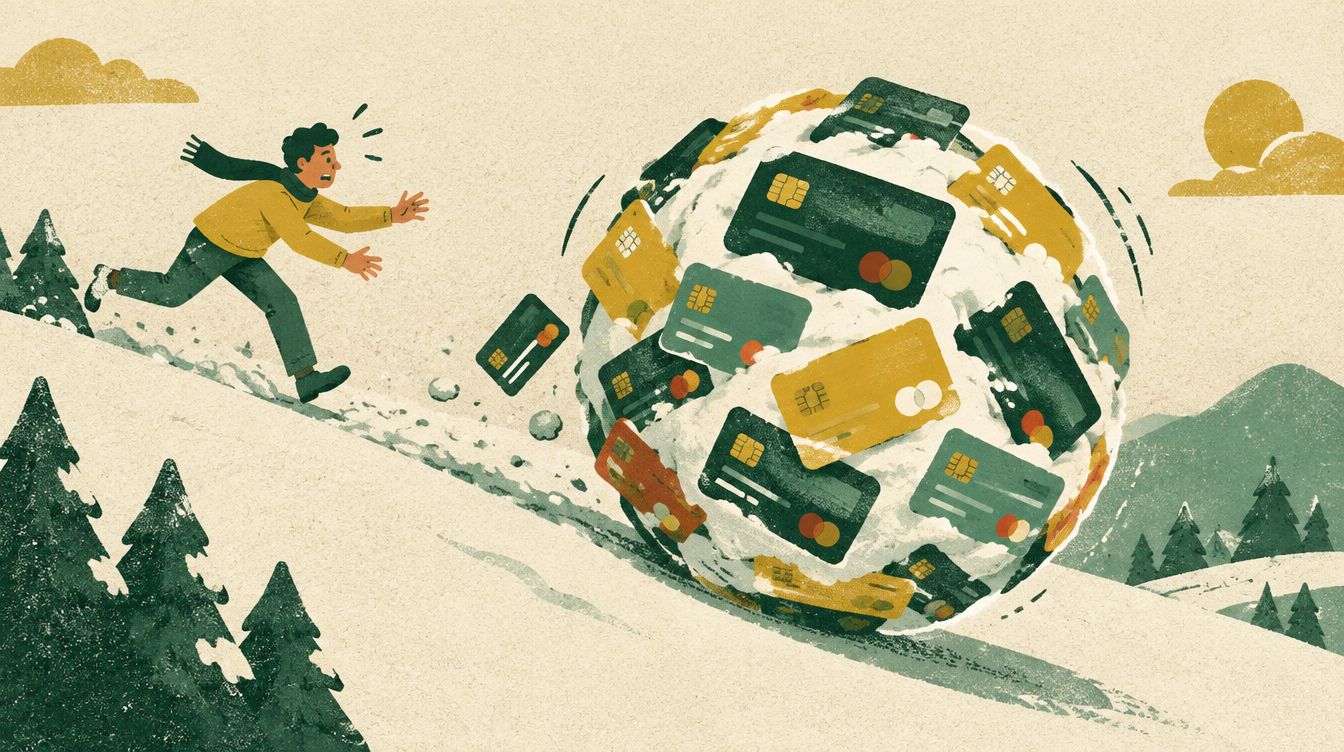
The interest alone now costs about $1 trillion a year. That's more than the entire military budget. Nearly 1 of every 5 tax dollars goes just to interest.
Since the government already spends more than it takes in, it ends up borrowing to cover that interest too.
Imagine owing $40,000 on credit cards and opening a new card just to pay the interest on the old ones. Next month the balance is bigger, so the interest is bigger. That's roughly what's happening.
One big difference: the U.S. borrows in dollars, and the Fed can always step in and buy that debt from banks and investors with new dollars. So the government can't run out of money the way you would. The real risk is quieter: more and more dollars, each one worth a little less.
Where the Fed comes in
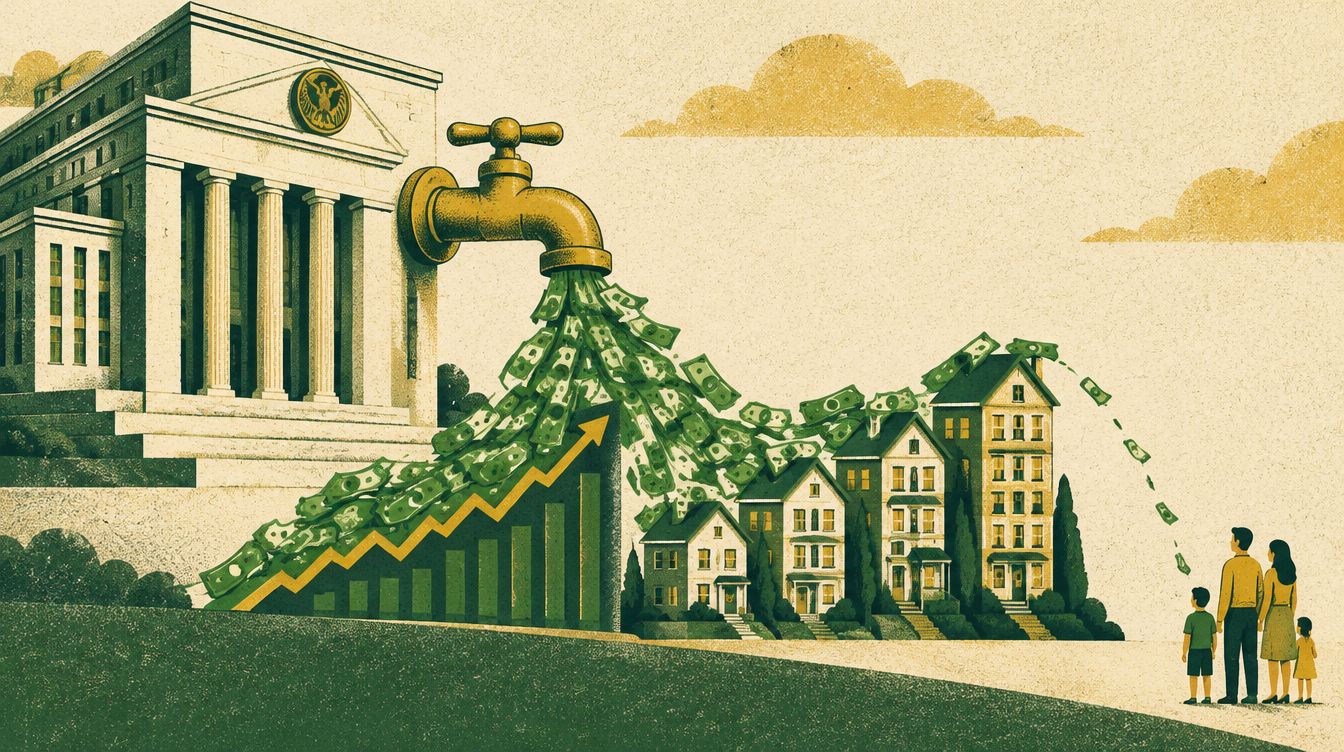
The Federal Reserve is the bank for banks. In a crisis, it can buy huge amounts of government bonds from banks and big investors. It pays with brand-new money it creates on the spot.
This pushes interest rates down, which makes borrowing cheaper. The effects tend to show up first in the prices of stocks and real estate.
In 2020 and 2021, the government borrowed trillions for relief checks and business loans, and the Fed created money to buy much of that debt. In about two years, the amount of money in the economy grew by roughly 40%. Some reached families directly. A lot also ended up pushing up the prices of stocks and homes.
The Fed can also pull money back. In 2022 it raised rates hard, and the money supply actually shrank for a while. But over the decades, the pile keeps growing.
Banks
create most new money when they make loans.
The government
borrows trillions by selling bonds.
The Fed
creates money to buy those bonds, mostly in a crisis.
The government doesn't print most of our money. Banks and the Fed create it.
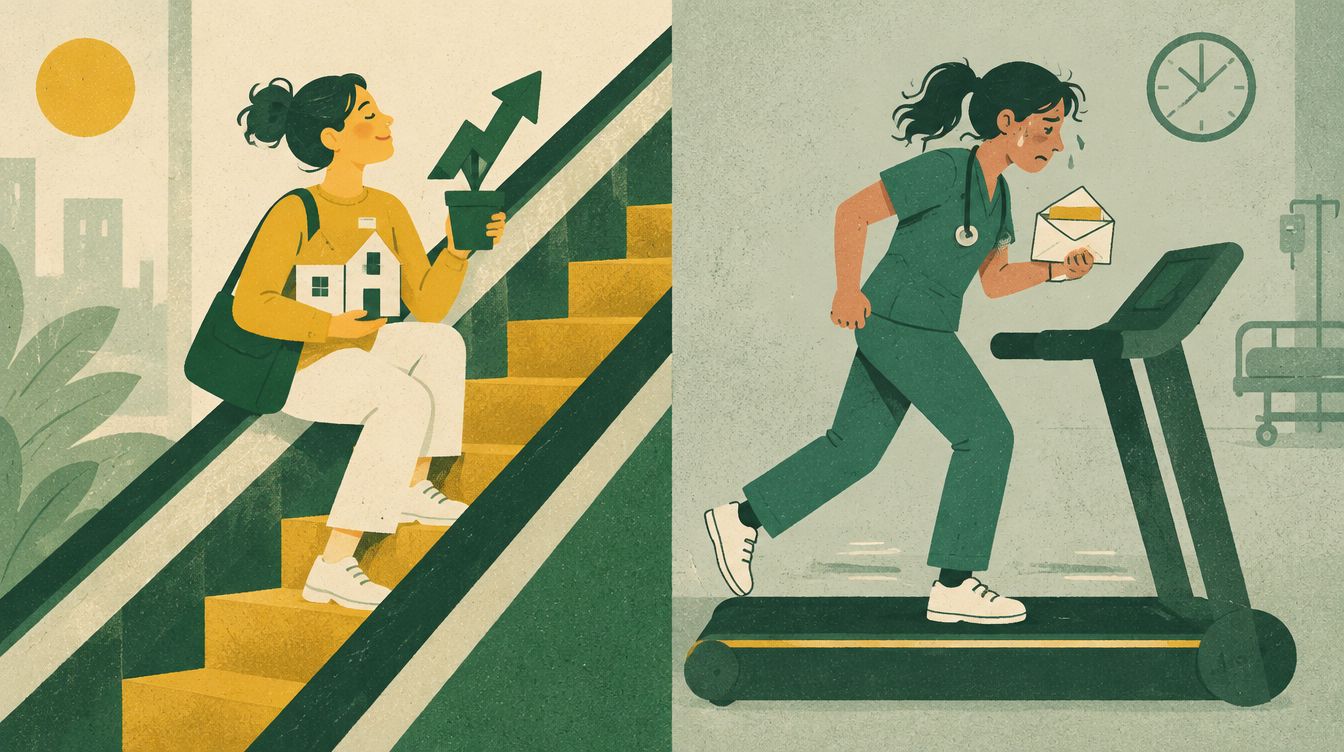
The things you need most get harder to afford
Money isn't the only reason prices rise. Oil, shortages, and wars matter too. But over the long run, a growing pile of dollars is one of the steadiest causes.
You felt this in 2022. Grocery prices jumped about 11% in one year, the fastest in 40 years. A $100 cart became a $111 cart.
Paychecks do rise over time. But they often rise slower than the big costs: rent, homes, health care, and college.
Things people own go up even faster
You can't build houses as fast as banks can create dollars. So when there are more dollars around, it takes more of them to buy a house.
Since 1980, everyday prices rose about 4 times. Home prices rose about 6 times, from roughly $65,000 to about $410,000. Most of that jump is the dollar shrinking. The rest is bigger homes, pricier land, and years of cheap loans, which came from the same system.
Stocks work the same way. People who already own assets (things that can grow in value, like homes and stocks) see their wealth grow just by holding on.
Interest flows up
When the government pays $1 trillion a year in interest, it goes to whoever owns the bonds: foreign governments, banks, investment funds, and also pensions and retirement accounts. But the more you already own, the bigger your share.
Meanwhile, regular families pay much higher rates. Credit cards charge over 20%. Car loans and mortgages got more expensive too.
So interest tends to flow from people who borrow to people who lend.
The bottom line
- Most money is created by banks (and the Fed) when people and the government borrow.
- The government borrows trillions a year, and now borrows to cover its interest.
- When money grows faster than the economy, each dollar buys less.
- People who own homes and stocks tend to get richer.
- People who live on a paycheck, or keep cash that earns less than inflation, fall behind.
If you feel like you work harder every year and still can't catch up, it's not just you. And it's not because you're bad with money. This is how the system works. Once you see it, you can start making smarter moves.
What this means for you
- Cash sitting still loses ground. Money earning less than inflation shrinks a little every year.
- High-interest debt is a double loss. You pay the interest, and you fall further behind owners. If nothing is left over each month, paying down 20%+ credit cards is the first win.
- Owning something matters. People who own things that hold their value tend to keep up. People who only hold dollars tend to slip. You don't need a house to start. Even a small amount each paycheck in something that grows, like a retirement account, makes you an owner.
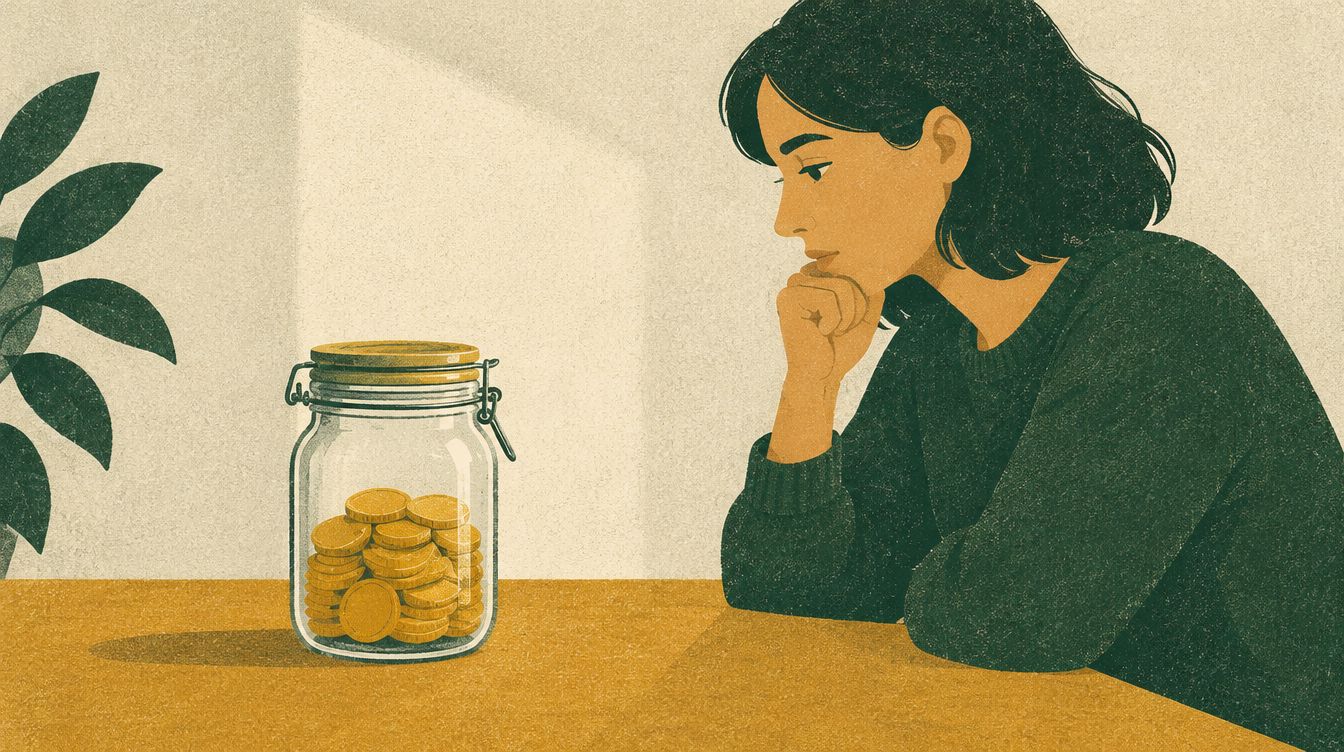
People have argued for a long time about what money should be. Some want it tied to gold again. Others say a little steady inflation keeps the economy moving. Every idea has tradeoffs.
But here's the question worth asking:
What would money look like if nobody could ever create more of it?
Read Part 2: If Nobody Could Print Money →- Bank of England, "Money creation in the modern economy" (2014)
- Federal Reserve: reserve requirements cut to zero (March 2020); M2 money supply data
- FDIC deposit insurance limit ($250,000)
- U.S. Treasury and Congressional Budget Office: national debt and interest costs
- Bureau of Labor Statistics: 2022 grocery price increase; consumer prices since 1980
- Census Bureau and HUD: median sales price of U.S. houses